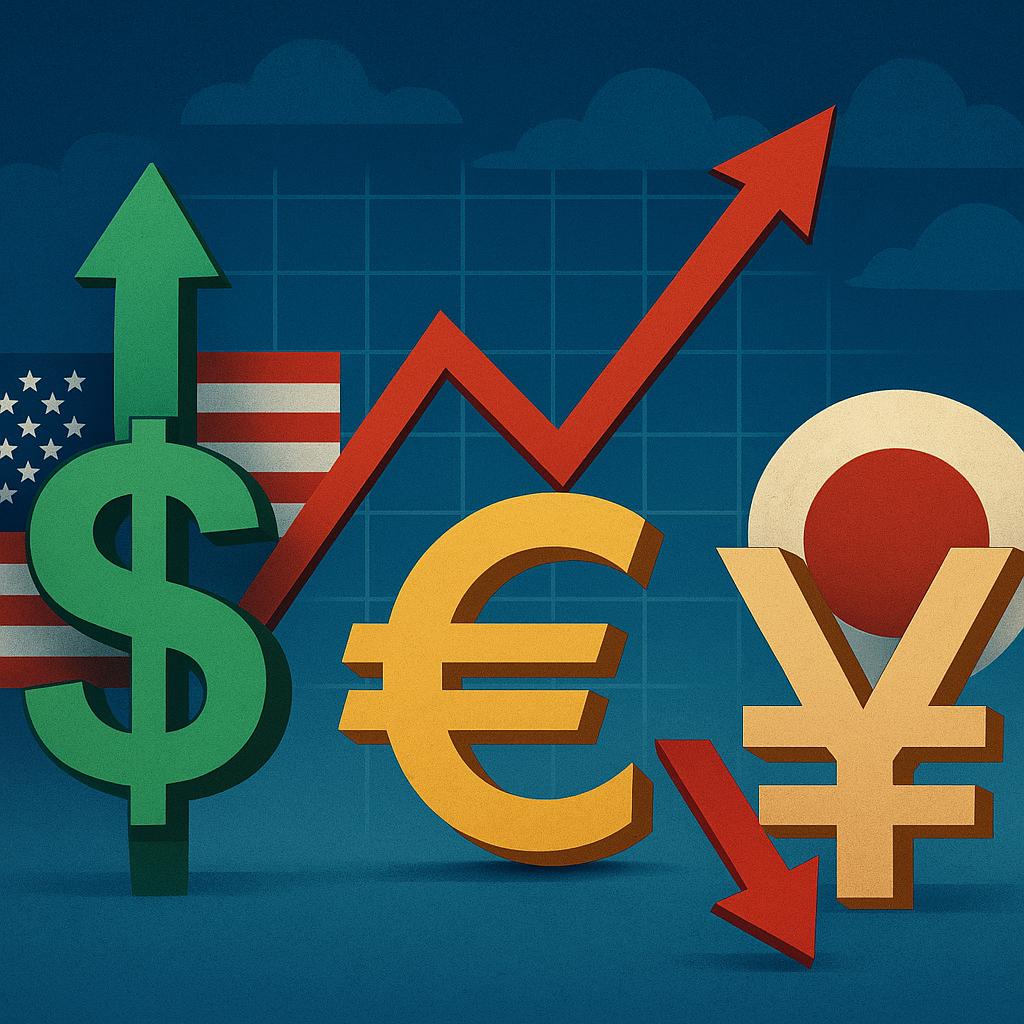
Dollar Surges on U.S. CPI Shock as Fed Hikes Loom; Euro and Yen retrace amid Central Bank Divergence
The forex market moved decisively over the past week as fresh U.S. consumer price data stunned traders and reignited bets on the Federal Reserve delivering a rate hike later this year. The September CPI release showed a 0.6% month-on-month rise, lifting the annual inflation rate to 3.7%, ahead of expectations. The surprise added to investor focus on the path of U.S. policy and fed expectations, underscoring a pivotal split among major central banks that is shaping currency flows across FX desks globally.
In reaction to the inflation print, the U.S. dollar index rose, strengthening against a basket of peers and pressuring the euro, yen, and other G7 currencies. Traders priced in a higher probability of a rate increase at the Federal Reserve’s December meeting, with futures implying a meaningful chance of action this year despite earlier bets of a longer pause. The immediate consequence for FX was a broad dollar rally, with USD/EUR and USD/JPY quoting appreciably higher into mid-October trade. Market participants cited a combination of sticky services inflation, robust wage data in some sectors, and renewed concerns about inflation persistence as drivers behind the move.
The euro zone context remains mixed. The European Central Bank has signaled a data-dependent stance, with markets watching inflation dynamics and energy prices as the region works through growth fragility and the fallout from a tighter global liquidity backdrop. After a September rate rise, the euro has traded with a cautious bid and selective resilience against some peers, but the current U.S. CPI impulse has weighed on the single currency as the U.S. greenback strengthens on the prospect of further rate tightening at the end of the year. The ECB’s upcoming policy communications and new growth readings will be critical to determine whether EUR/USD can recoup ground or remains capped by U.S. rate expectations.
The Bank of Japan remains an outsized swing factor in the FX arena. With the yen historically sensitive to global yields gaps, any shifts in U.S. policy expectations or Japanese policy cues can drive sharp moves. In recent sessions, the JPY has tracked the direction of U.S. yields more than most, with traders watching for signs of intervention or shifts in Bank of Japan guidance as the policy landscape evolves. A stronger U.S. dollar tends to press yen pairs toward the 150–160 per dollar zone depending on momentum, while any BOJ nuance can trigger rapid re-pricing in USD/JPY and related crosses.
Across Asia, the Australian and New Zealand dollars have shown mixed trajectories. The AUD benefited at times from relatively resilient domestic data and commodity support, while the NZD has faced more pronounced downside pressure in the context of global rate differentials and risk sentiment. Traders observed that commodity-price dynamics, including oil, and broader risk appetite remained key inputs for carry trades and commodity-linked FX exposure. Japan’s ongoing yield gap shifts, Australia’s policy stance, and China’s growth trajectory are all in focus as traders weigh whether risk appetite can stabilize amid a shift toward higher-for-longer global rates.
Key themes shaping the near-term forex outlook
1) The Fed’s policy path remains data-dependent but increasingly price-influenced – The September CPI surprise has elevated the odds of a December rate move, reinforcing a data-driven stance from the Fed. Markets will closely watch the October and November print runs, payrolls data, and inflation components to gauge whether the inflation softening trend resumes or if sticky services inflation reasserts itself. The implications extend to cross-border capital flows and carry trades as traders rebalance exposures to reflect a higher terminal policy rate.
2) ECB posture and euro sensitivity to energy and growth signals – With energy prices fluctuating and growth risks persisting, the euro area narrative remains dominated by inflation dynamics and the degree of policy divergence versus the United States. Any stronger-than-expected euro-area pressure on inflation may force the ECB to adjust expectations for future tightening, while softer readings could support a multiyear stabilization of EUR/USD if U.S. rate expectations cool.
3) Yen and yen-linked flows in a shifting yield landscape – The yen’s sensitivity to U.S. yields continues to define USD/JPY volatility. Any surprise about BOJ guidance or a shift in the yield gap can trigger abrupt moves. Traders remain vigilant for intervention signals or policy tweaks that could reprice risk premia in the short run.
4) Oil, energy prices, and real economy alignment – Oil’s role as a volatility amplifier remains critical. A sustained move toward or away from $100 per barrel can tilt growth expectations and inflation trajectories, thereby influencing both risk sentiment and policy pricing embedded in major currency pairs.
In practical terms, traders should monitor three data streams over the next 7–14 days: (i) U.S. CPI and core CPI components for October and November, (ii) Eurozone inflation and growth indicators, including energy-related price pressures, and (iii) Bank of Japan policy signals and any guidance on yield curve stabilization. The biggest event likely to impact the forex market in the near term remains the U.S. inflation trajectory and the Fed’s policy response, given the current configuration of rate expectations and market positioning.
Market participants should also consider liquidity dynamics as the fourth quarter unfolds. The combination of higher implied policy rates, persistent inflation concerns, and geopolitical risk can create volatility pockets, particularly around major data releases and central bank communications. As traders recalibrate portfolios, keeping a disciplined focus on relative value across USD, EUR, JPY, AUD, and GBP will be essential to navigating potential trend reversals or renewed weightings in riskier assets.
Bottom line: The latest U.S. CPI data catalyzed a renewed dollar rally and elevated expectations for a late-2026 Fed hike scenario. With the ECB, BOJ, and other major central banks maintaining data-dependent stances, the forex market is likely to remain range-bound but susceptible to sudden breakouts on unexpected inflation readings or policy guidance. Traders should prepare for heightened volatility around upcoming quarterly data and policy events, staying attuned to shifts in risk sentiment, energy pricing, and yield differentials that drive the most liquid currency pairs.