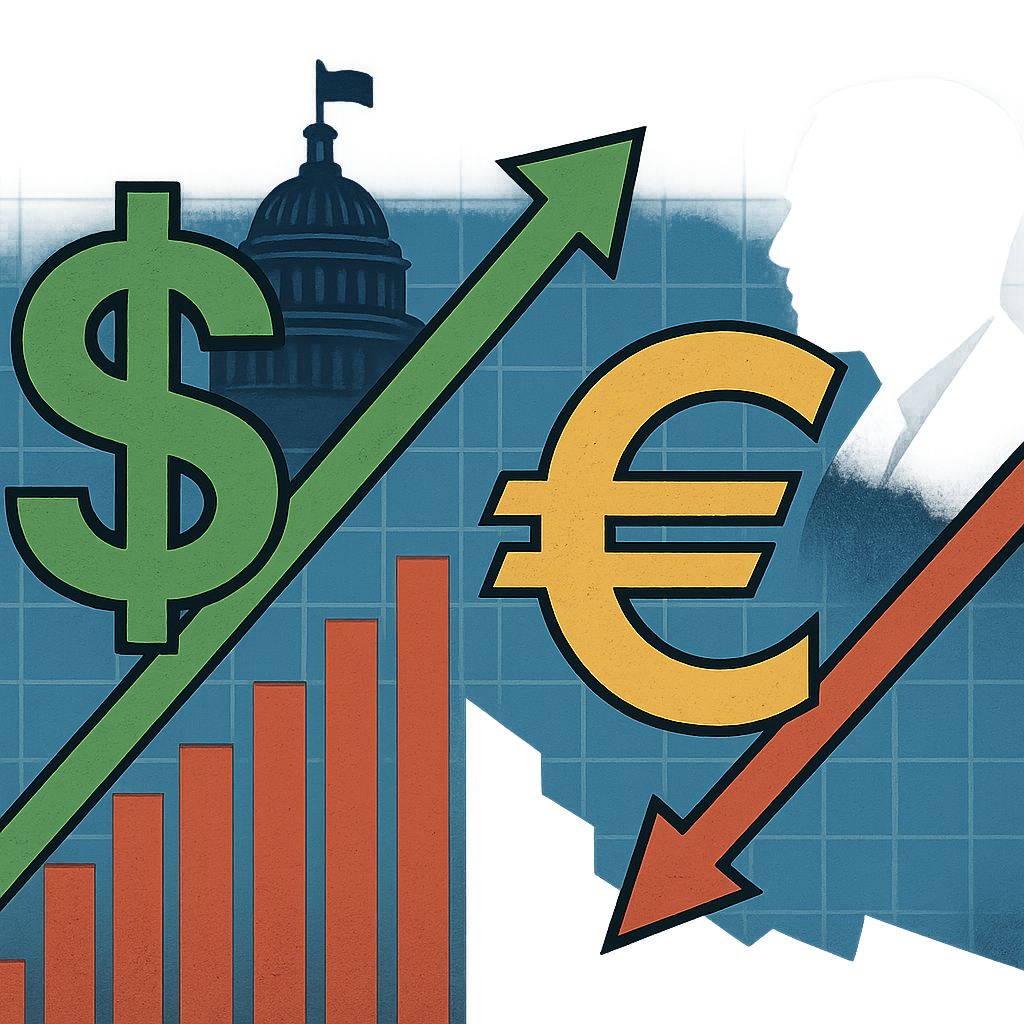
Dollar Strength Accelerates as Eurozone Political Strains and Fed Minutes Tilt FX Markets
The foreign exchange markets swung decisively over the past several days as investors priced in a confluence of political risks in Europe and the expectation of further monetary tightening in the United States. The most consequential development for currency pairs this week has been a broad move higher in the dollar against the euro and several other G10 peers, driven by a combination of rising European borrowing costs, political uncertainty, and renewed expectations for the Federal Reserve to maintain a higher-for-longer stance.
On October 5, 2026, the euro traded below $1.12 for the first time since May 2025, marking a roughly 4% drop from early September levels. Analysts cited France’s widening deficits, rising long-term yields, and political stalemate as central to the euro’s weakness. Spain also announced a snap election for November 29, potentially reshaping the political landscape of the euro area at a critical time for fiscal policy and bond markets. The euro’s slide underscores a renewed concern that the European Central Bank may confront difficulties in containing long-duration yields without additional policy steps, even as the Fed contends with domestic inflation data and a still-tense rate outlook.
Market observers highlighted that the euro’s decline is not merely a function of domestic eurozone factors but also a reflection of the differential in policy momentum between the United States and Europe. In essence, the dollar has benefited from a relative intensification of U.S. rate expectations compared with European pricing. As one market participant noted, a strike of higher U.S. yields tends to pull capital toward dollar-denominated assets, supporting the greenback in times of global rate uncertainty.
In parallel, U.S. dollar strength was reinforced by the publication of the Federal Reserve’s September FOMC minutes on October 7, 2026. The minutes revealed that a non-trivial share of policymakers continued to view another rate increase as a possible near-term option, even as inflation dynamics remained a focal point for decision-making. This sentiment helped sustain a bid for U.S. short-duration instruments and supported dollar demand as market participants recalibrated bets on the timing and magnitude of future policy moves. The minutes’ tone contributed to a broader narrative: while the Fed is not guaranteed to hike at every meeting, the central bank’s trajectory remains higher for longer relative to many international peers, reinforcing dollar momentum in the near term.
Oil prices also intersected with currency markets in the preceding days, with higher energy prices historically linked to pro-dollar dynamics through inflation expectations and commodity pricing channels. While crude futures fluctuated, the general trend during the week contributed to a more resilient dollar, as investors priced the path of inflation and monetary policy in tandem with energy market signals. The oil-financed inflation channel has historically been a non-trivial factor for USD demand, especially when combined with a hawkish Federal stance or constrained European policy flexibility.
From a regional risk perspective, investors examined how political events in Europe could interact with bond markets and cross-border capital flows. In France, deficits and fiscal pressures raised questions about long-run debt sustainability under a high-rate environment. In Spain, the snap election raised the probability of policy shifts that could affect fiscal discipline and growth trajectories. Traders therefore watched for any signs of ECB policy nuance, especially around the balance sheet and potential support tools that could ease yield pressures, though no immediate ECB policy changes were announced in the observed window.
The interaction between sovereign yields and currency values remained a critical channel for FX traders. The yield differential between U.S. Treasuries and German Bunds widened in favor of the United States at multiple maturities, supporting dollar strength against the euro and other European currencies. This dynamic aligns with a broader market assessment that the rate differential between major economies will continue to be a dominant determinant of FX directions through year-end 2026, particularly as the Fed’s stance diverges from European and Japanese policy paths.
Capital flows within emerging markets also reflected the risk-off environment associated with euro area political risk and U.S. rate expectations. Some investors rotated into higher-quality, dollar-denominated assets as a hedge against volatility, while others sought income in currencies with relatively steadier monetary outlooks. The net effect was a more cautious risk environment that reinforced the dollar’s bid in the spot market and through options pricing, where hedging demands rose as volatility metrics ticked higher in the wake of European political inputs and U.S. policy signals.
Looking ahead, the market is likely to remain sensitive to U.S. economic data releases and the Fed’s communications on the policy path. traders will also monitor European political developments and any signs that the ECB might contemplate additional policy actions to address the euro-area’s yield dynamics. The next major event on the calendar is the FOMC policy communications and minutes across late October, which will be crucial in shaping expectations for the December meeting and the trajectory of the dollar against major pairs such as EURUSD, USDJPY, and GBPUSD. Volatility could spike around these announcements, given the combination of domestic inflation readings, labor market signals, and European political risk factors.
In sum, the biggest current driver of forex prices is the U.S. rate outlook relative to Europe’s growth and political risk backdrop. The euro’s descent to around $1.12, together with a firmer dollar index and higher implied odds of a December Fed hike, underscores a shift in the currency complex toward U.S. monetary policy expectations as the dominant force shaping international currency flows. As always, traders should balance macro data, central bank communications, and geopolitical developments when assessing the next moves in major currency pairs.
Key figures to watch: euro/USD hovering near sub-$1.12 levels; US dollar index (DXY) holding above 105; U.S. 2-year/10-year yields tracking higher versus their euro-area equivalents; France and Spain fiscal and political developments feeding euro-area yield pressure; Fed minutes released on October 7, 2026, with implications for the December rate path.
For traders, the synthesis is clear: policy divergence remains the primary driver of FX moves in the near term, with political risk in Europe acting as a transatlantic amplifier. Risk management recommendations emphasize disciplined position sizing around major data releases and a preference for hedges against euro-area volatility while maintaining exposure to the dollar’s relatively better rate outlook until the global growth and inflation narrative clarifies further.