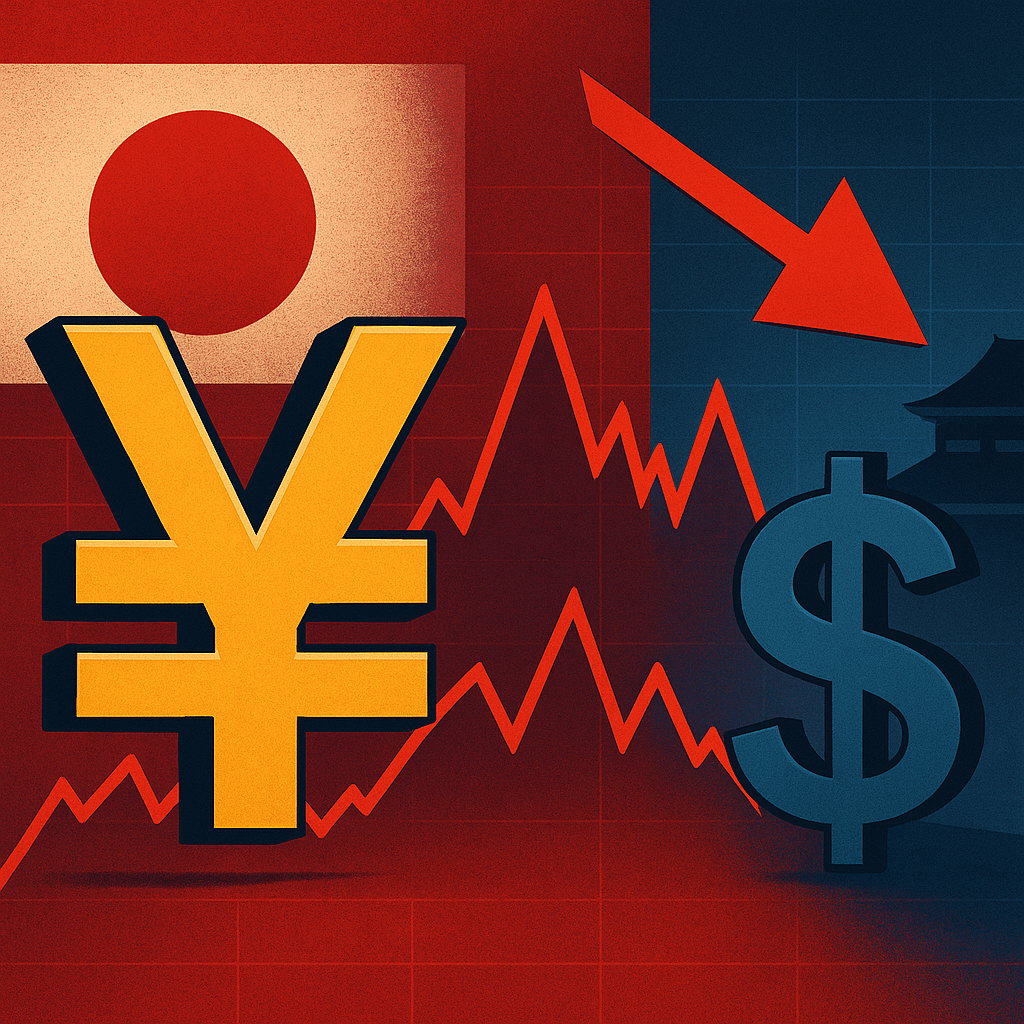
Yen Interventions Drive FX Market Volatility as BoJ Signals Tilt Ahead of Fall Policy Review
The foreign exchange landscape surged into a new phase in August 2026 as the Japanese authorities carried out market intervention to curb a rapid depreciation of the yen, creating a fresh wave of volatility across major currency pairs. The intervention followed weeks of dollar strength that had pushed USD/JPY toward multi-decade highs, amplifying concerns about imported inflation in Japan and widening the policy divergence with the United States. Traders responded by recalibrating risk exposure, with the dollar’s strength softening notably against the yen in the hours after the intervention was announced, only to rebound as market positioning evolved and risk sentiment shifted.
In the days surrounding the intervention, the USD/JPY rate moved from the upper 160s per dollar to a tighter range around the 156-158 area, before resuming a broader tug-of-war as traders weighed the implications for monetary policy paths in both Tokyo and Washington. The yen’s swing created spillovers for other G-10 currencies, with the euro and sterling trading within a tight band as hedging flows and cross-border carry trades adjusted to new risk expectations. Market liquidity and volatility remained elevated, with quick-fire repricings in option markets and augmented risk premia across fees for carry trades and hedges.
Sept/Oct policy expectations to guide the next leg The Bank of Japan’s communications in August signaled a potential tilt in policy stance, even as official rates remained entrenched at historically low levels. Analysts noted that investors were recalibrating expectations for a formal policy shift or at least clearer guidance on how the BoJ intends to manage the currency impact from an aging demographic, energy price pressures, and global rate differentials. While the Fed maintained a cautious stance on further tightening, markets priced a path for slower balance of risks, keeping the US dollar’s premium in check relative to the yen but not erasing it entirely. The Bank of England also kept policy rates unchanged through late July, contributing to a broader global backdrop of cautious central-bank communication. turn0news24
Key developments in the US and Europe shape the near-term FX outlook
The U.S. payrolls data released in early August surprised to the downside, reinforcing bets that the Federal Reserve might adopt a more data-dependent stance rather than a aggressive path of further rate hikes. Market participants interpreted softer payrolls as a potential signal of slower wage growth ahead, dampening dollar momentum and supporting flows into currencies perceived as higher-yield or more rate-sensitive, including the euro and pound. The dollar index drifted within a narrow band as traders weighed the possibility of a dovish Fed response to incoming data. In parallel, oil-price dynamics and energy-market news continued to color risk sentiment, given the sensitivity of several currency blocs to energy costs. turn0search11
Interventions, policy divergence, and the outlook for USDJPY
Analysts noted that the August intervention was part of a broader playbook in which authorities use FX operations to counter abrupt moves and preserve policy credibility. The yen’s weakness had several catalysts, from domestic inflation dynamics to the interplay of global growth signals and the evolving Fed trajectory. As traders digest the news, the USDJPY pair remains a focal point for volatility traders and option buyers who are seeking to hedge against further abrupt moves. Traders also monitor liquidity conditions as the summer trading season winds down, with some desks reporting thinner participation but heightened risk-taking in shorter tenors. Kitco’s coverage highlighted the immediate impulse in the USDJPY, while also flagging the risk that further intervention could be warranted if the pair reaccelerates beyond tolerable levels. turn0search8 turn0search11
Markets in the week ahead: what to watch
Looking ahead, several measures will determine whether the yen gains stuck or fade. The BoJ’s communications in August and potential tweaks to its yield-curve control framework will be critical for traders seeking to gauge policy durability. On the U.S. side, expected further improvements in inflation data, a cooling jobs market, and the Fed’s communications will shape the dollar’s path. European currencies, including the euro and the pound, will again hinge on EU and UK inflation releases and central bank commentary. FX desks noted that volume patterns could shift as U.S. markets reopen after mid-summer holidays, potentially increasing liquidity and amplifying breakout moves in key pairs like USD/JPY, EUR/USD, and GBP/USD. turn0search7 turn0news26
Data points and statistics from the past week
- USD/JPY touched the 163-164 range in late July before interventions pulled the rate back toward 156-158 in early August, according to AP News’ August coverage of the intervention and subsequent market reaction.
- USD index movements showed intermittent strength but did not sustain a decisive break higher as markets absorbed Fed and BoJ communications, with several outlets noting a glacial pace in USD upside during the period.
- Oil market dynamics and energy-price translations continued to influence risk sentiment and currency valuations across Europe and Asia, with analysts noting that energy costs could re-enter the inflation narrative in several economies.
These datapoints provide a window into how policy signals, market interventions, and macro data interact to shape short-term FX volatility. As the summer season gives way to autumn trading, investors will be watching for clarifications from central banks and for any escalation in currency-market operations that might redefine the baseline for risk and return across major currency pairs.
In summary, the biggest event shaping the forex landscape in the past few days has been the Japanese authorities’ intervention in the yen, followed by a tilt in BoJ policy signaling and a reaffirmation of policy divergence with the U.S. central bank. The event has injected volatility into USDJPY, altered hedging dynamics across global markets, and raised the prominence of policy communication as a driver of short-term moves in currency markets. For traders and fund managers, the coming weeks will be defined by how convincingly the BoJ can articulate a sustainable framework to absorb external shocks, and how the Fed and other major central banks respond to incoming inflation and employment data. turn0news24 turn0search8 turn0search7