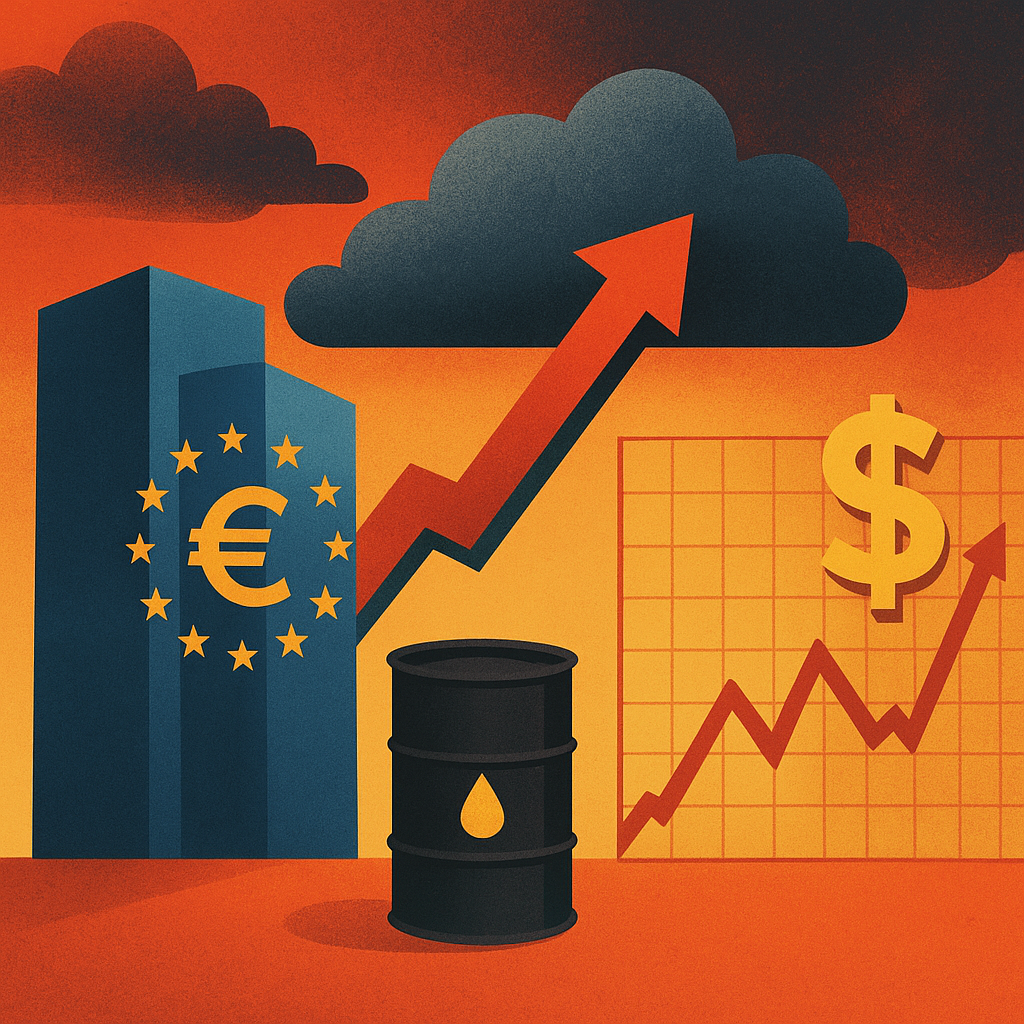
ECB Holds Rates as Oil-Driven Energy Still Clouds Inflation Path; Markets Brace for September Hike and Fed U-turn Risks in Front of July FOMC
Global currency markets entered the last week of July with a renewed focus on central bank policy, energy prices, and the evolving path of US monetary policy. The European Central Bank kept its key rate unchanged at 2.25% on July 23, 2026, citing ongoing uncertainty around inflation dynamics and the potential for energy costs to reassert upside pressure. The decision echoed a broader pattern in major economies where policymakers are balancing high headline inflation against the risk of growth slowdown and financial-market volatility tied to geopolitical tensions and commodity price shocks.
In Frankfurt, ECB President Christine Lagarde acknowledged that while the immediate inflation impulse had cooled somewhat, the broader inflation trajectory remains susceptible to shifts in energy markets. The central bank’s stance was reopening the door to further tightening, with markets pricing in a higher probability of a September rate move should oil prices stabilize near the upper end of recent ranges and growth data surprise to the upside. A Reuters-style market read highlighted that the pause yesterday could be temporary, given energy prices have rebounded in recent days, complicating the euro area’s inflation calculus.
Analysts note that the euro remains sensitive to the policy divergence story between the Federal Reserve and the ECB. The Fed has signaled a cautious stance in recent communications, but traders remain wary of a potential rate hike if US inflation proves stickier than anticipated. The confluence of a firmer oil complex, a still-ambitious inflation target, and growth headwinds in the euro area has kept EUR/USD oscillating in a broad band near parity with risk premiums fluctuating in response to headlines about Middle East tensions and supply-chain concerns.
Beyond the euro zone, the Bank of England’s recent communications keep a tight lid on near-term rate cuts, with UK rate expectations still influenced by domestic labor market resilience and energy-price volatility. The Bank Rate remained at 3.75% in June, with investors watching for any second-half shifts that could reprice pound exposure against the greenback and the euro. In the United States, markets are positioned for the July FOMC meeting, where traders are weighing the odds of a policy adjustment against the backdrop of a cooling but stubbornly persistent inflation signal. The Fed’s current policy stance sits in a delicate corridor: enough to prevent a backslide in inflation, but flexible enough to respond quickly if price pressures reaccumulate.
Oil prices have been a central driver of the latest market moves. In the wake of geopolitical frictions in the Middle East and rising tensions around shipping lanes, benchmarks have climbed toward the upper end of recent ranges, reviving fears of higher energy costs feeding into consumer prices. The energy complex, correlated with inflation expectations, has been a key variable in currency trajectories across USD, EUR, GBP, and commodity-linked currencies such as the CAD and AUD. Traders increasingly calibrate their bets on whether a sustained oil rally could prompt the Fed or the ECB to recalibrate their trajectory toward higher policy rates or a delayed easing cycle.
Biggest Event and Market Implications
The most impactful event for the forex market in the past several days has been the ECB’s decision to hold rates while signaling openness to future tightening, combined with renewed market expectations for the September move. This creates a bifurcated risk environment: the euro benefits from a higher-for-longer stance if oil prices stay elevated, yet remains vulnerable to renewed energy-price spikes that could re-ignite inflation fears and force quicker policy normalization. For traders, the key implication is greater volatility around EUR/USD, with the potential for a two-way breakout depending on the ECB’s next communications and energy-price shocks.
In the same period, data and commentary from other central banks, including Bank Indonesia and the Bank of England, have reinforced a pattern of selective tightening in Asia-Pacific and Europe, while global growth signals remain mixed. Indonesia’s BI rate decision last week underscored a pro-stability approach, with the rupiah showing resilience amid a complex global backdrop and capital-flows dynamics that have improved relative to early 2026. This regional variation adds another layer of cross-currency sensitivity as traders monitor capital-flow narratives alongside commodity and energy-price trends.
Turning to the United States, the anticipation around the July FOMC meeting reflects a market that has priced in a cautious policy path. Traders are weighing the possibility of a modest rate hike against the risk of a late-cycle slowdown that could prompt a pivot toward more accommodative policy later in the year. The exchange rate implications are clear: a June-to-July divergence in policy signals has kept USD pairs in a high-volatility regime, with USD/JPY and USD/CAD reacting to shifts in risk sentiment and oil-price expectations in near-record fashion.
In practical terms for traders and businesses, the current environment suggests several near-term playbooks. First, keep a close eye on crude oil price trajectories and any supply-side developments in the Middle East, as these are likely to continue driving volatility in EUR/USD and USD/JPY. Second, monitor the ECB’s next policy communications and the Fed’s July policy statement for any explicit tilt toward earlier tightening or a new inflation risk narrative. Third, consider hedging currency exposures with options that reflect anticipated regime shifts rather than a single directional bet, given the mixed macro signals.
Market participants should also pay attention to regional data releases that can influence carry trades and capital flows. For example, euro area confidence measures, German industrial output, and UK consumer spending are all potential inputs that could push major FX pairs in either direction if data prints deviate from expectations. The broader takeaway is a forex landscape characterized by heightened sensitivity to energy prices, more frequent policy-driven volatility, and a growing emphasis on policy-path uncertainties rather than a single-direction narrative. As July progresses, traders will be watching for fresh signals from the ECB and the Fed, as well as any escalation in geopolitical risk that could disrupt the delicate balance currently anchoring the global currency markets.
In sum, the ECB’s hold-and-reopen stance, paired with oil-price dynamics and US policy expectations, stands out as the defining influence on forex across 2026’s second half. Investors should prepare for continued volatility, with potential for rapid shifts in USD, EUR, and GBP depending on the next rounds of central-bank commentary and oil-market developments.