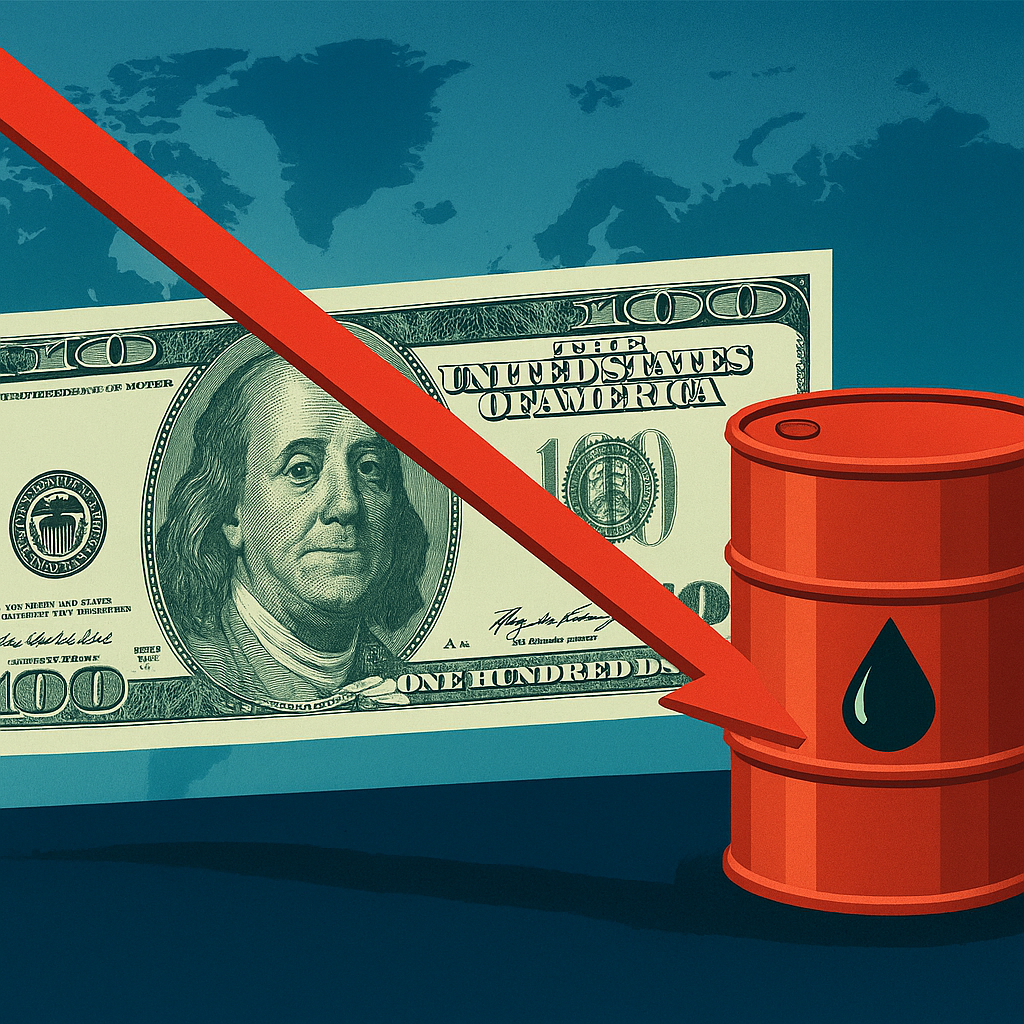
Dollar Pauses as US Inflation Softens and Oil Tensions Remain in Focus: Forex Markets Enter a Key Crosswinds Phase
The foreign exchange market moved into a concise, data-driven crosswinds phase in mid-July 2026 as fresh US inflation dynamics and Middle East energy tensions clashed with ongoing bets on the Federal Reserve’s policy path. Traders are balancing cooler domestic price pressures with potential spillovers from geopolitical risk, while currency pairs across the board recalibrate to new risk scales.
Biggest event of the week: US inflation cooling supports a hold in US rate expectations. Fresh data showed slower inflation momentum in June, reinforcing the case for the Federal Reserve to pause any near-term hikes. In particular, headline CPI readings cooled while core inflation remained contained, altering market pricing for Federal Reserve policy. The reactions in the Treasury and FX markets were swift: two-year yield movements cooled, and traders increasingly priced in a higher probability that the Fed will keep policy on hold for the remainder of 2026 rather than moving again in July. This shift underpinned a broad-based pullback in USD strength in early trading sessions, even as markets remained vigilant for any surprise from upcoming inflation prints or wage growth data.
Analysts cited by major outlets noted that soft June inflation data could provide policymakers with much-needed room to assess the economy’s trajectory without pressing for rapid tightening. The evolving inflation narrative comes as the US labor market continues to show resilience, with unemployment claims hovering near historically low levels and job openings still signaling tight conditions in several sectors.
Geopolitics and energy risk add to the price backdrop. Meanwhile, tensions in the Middle East and the resulting impact on crude prices created a second major axis of risk for the FX market. Oil traded near month highs on concerns about supply disruption, which can feed through to inflation expectations and, in turn, to currency valuations. A higher oil price environment tends to support currencies from commodity-exporting blocs and can weigh on import-reliant economies, influencing carry trades and risk sentiment across currency majors and emerging market pairs.
In the euro area, traders watched for growth signals and European Central Bank communications as a counterbalance to US-led rate expectations. The euro traded with a firmer tone against the dollar at times when US data was softer than anticipated, reflecting cross-border capital flows and relative shifts in policy expectations. By midweek, the single currency hovered near the upper end of its recent range, trading around $1.14 to $1.15 in several sessions and reacting to domestic data releases and regional manufacturing indicators.
GBP and the UK outlook: political and macro factors keep the pound sensitive. Sterling experienced nimble moves around the possibility that the next UK administration will embrace fiscally conservative policies, with ongoing debates about fiscal plans and ministerial appointments contributing to volatility. The currency’s performance has been closely tied to expectations for UK growth, inflation trajectories, and the Bank of England’s response to evolving data. Some sessions saw the pound press toward multi-week highs, only to retreat on headlines that raised questions about the pace of domestic policy normalization and trade dynamics after recent parliamentary developments.
Across Asia, the yen remained a focal point given its status as a traditional safe-haven proxy in times of policy uncertainty and energy-price volatility. Market participants continued to monitor BOJ commentary and any signs of intervention risk, particularly if USD moves consolidate or widen on new inflation surprises. The USD/JPY pair oscillated within a defined range as traders weighed depreciation pressures against potential policy guidance from Tokyo.
Commodity-linked narratives and risk appetite. With crude prices serving as a real-time gauge of energy risk, commodity-linked currencies found themselves juggling broader risk sentiment. The Canadian dollar and Norwegian krone were among the beneficiaries of higher energy price narratives, while higher-beta EMFX traded with more caution in the face of lingering inflation concerns and the potential for policy drift in key developed economies. Market participants also scrutinized global growth indicators and PMIs for hints about which economies might outpace or lag in second-half 2026, influencing carry trades and hedging activity.
Data calendar and near-term implications. The immediate data calendar features inflation, wage, and labor-market releases from the United States and key European economies, along with central bank commentary and oil-market updates. Traders will likely absorb CPI, PPI, and wage growth prints for signs of renewed price pressures, while central bank officials’ remarks could precipitate quick adjustments in risk sentiment and liquidity conditions. For forex traders, the critical focus remains the degree to which inflation decelerates without tipping into deflation, and how policymakers react to evolving sectoral inflation dynamics, energy costs, and labor-market tightness.
In practical terms, market participants should monitor volatility measures and liquidity conditions in major pairs such as EUR/USD, GBP/USD, USD/JPY, and USD/CNY, along with risk-sensitive crosses like AUD/NZD and USD/SEK. The current moment represents a transition where the forex market absorbs a cooling US inflation backdrop while pricing in the possibility of energy-driven shocks and cross-asset correlations. Traders may position for a data-driven range as USD momentum stabilizes and global growth signals firm or weaken, depending on the next batch of inflation and payroll reports.
Implications for traders. The evolving scenario suggests a more nuanced USD path: potential near-term softness if US inflation continues to cool and rate hikes remain unlikely, followed by renewed volatility if inflation surprises to the upside or if geo-political tensions intensify. For risk managers, hedging strategies around energy exposure and currency pairs with significant commodity linkages could be appropriate, while carry-trade dynamics may re-emerge as central banks recalibrate their policy tempo in response to new data. As always, responsive risk controls and scenario analysis will be essential as markets navigate this multi-factor landscape.
Overall, the week’s key message for the forex market is a shift from expectations of imminent tightening to a more data-dependent stance driven by inflation trajectories and energy price volatility. The biggest event—the US inflation print and the Fed’s likely hold—continues to shape the USD’s intra-week dynamics, while geopolitical and energy-market developments inject fresh currents into major currency pairs. As liquidity ebbs and flows, traders should stay disciplined, focusing on concrete data releases, central-bank communications, and cross-asset signals for decisive directional clues.
Source data points underpinning this synthesis include recent US inflation readings that cooled in June, commentary on rate-hike expectations, and oil-price movements linked to Middle East tensions. Market commentary cited in the period reinforced the narrative that policy paths are now more data dependent than at any point in the first half of 2026, with currency markets adapting to a new equilibrium between growth, inflation, and energy costs.
Note: Figures and dates referenced reflect the latest public reports in mid-July 2026. For readers requiring a precise, day-by-day chronology, the clips above summarize the most impactful developments shaping foreign exchange dynamics over the past several sessions rather than offering a comprehensive diary of all macro releases.