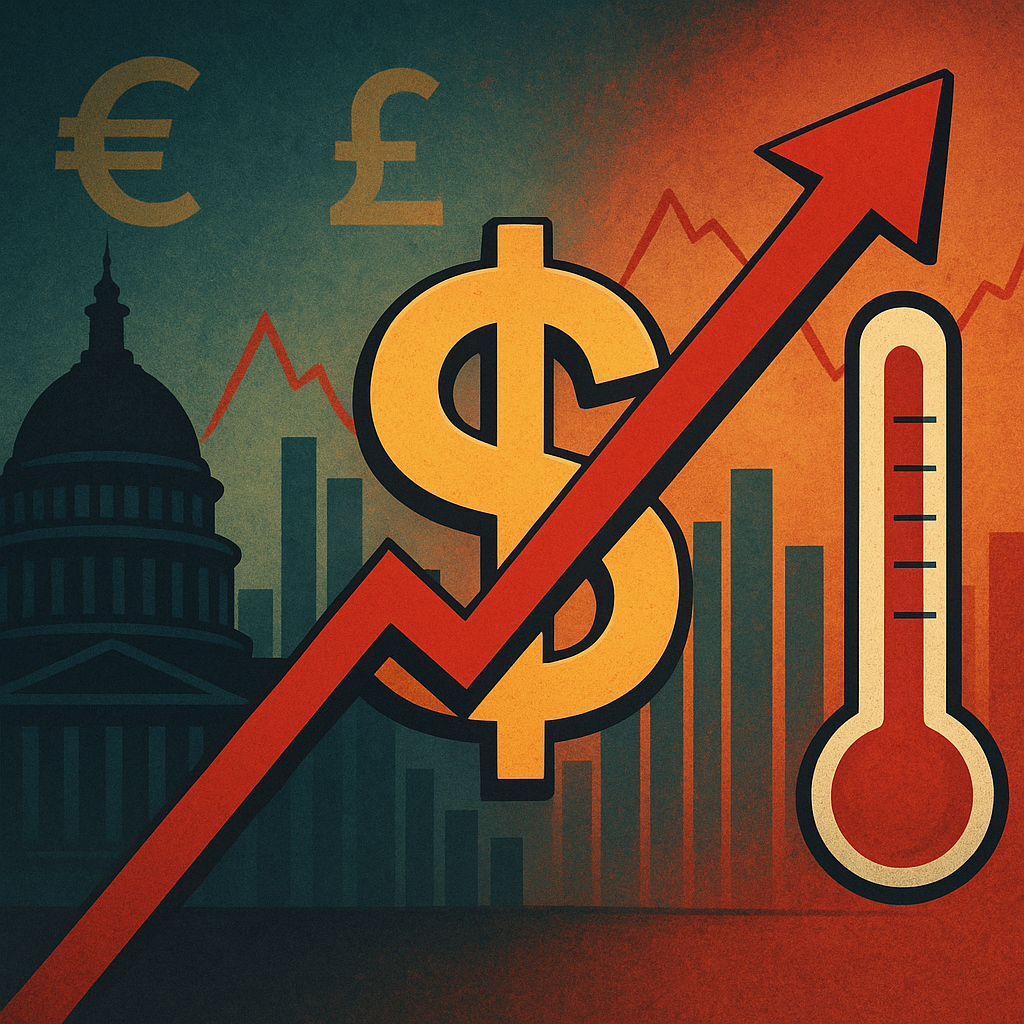
Fed Signals Higher-For-Longer Path as US Inflation Resists Cooling, Driving USD Rally Across Major FX Majors
In the past few days, the foreign exchange market has been dominated by a shift in expectations for U.S. monetary policy, after fresh inflation data reinforced the case for a continued tightening cycle. Traders priced in a higher probability of another rate increase from the Federal Reserve in December, sending the U.S. dollar broadly higher against major peers and amplifying gyrations in cross pairs as risk sentiment wavered.
Biggest event: Fed hawkish tilt strengthens the dollar
Weekly and daily FX snapshots captured a decisive move as investors recalibrated the outlook for policy. A sequence of stronger-than-expected U.S. inflation readings, together with hawkish commentary from Federal Reserve officials, pushed markets to reassess the terminal fed funds rate. A notable example cited by market researchers showed the 2-year U.S. treasury yield jumping around 40-45 basis points over a five-day window, the largest move of that magnitude since 2022, reinforcing the dollar’s bid as traders priced in higher-for-longer rate expectations. These dynamics outweighed the relief rally seen when U.S. equities paused and investors sought shelter in dollar-denominated assets.
Market intelligence from MUFG Research noted that the U.S. dollar index regained momentum as expectations for faster pace of rate hikes were reflected in swap curves and fed funds futures. The same notes highlighted that the combination of sticky core inflation and hawkish Fed rhetoric warranted a higher probability of a 25 basis point hike at the December meeting, with some participants even debating the possibility of a 50 basis point move should inflation pressures prove persistent. In practical terms, that scenario has kept the dollar well bid across the G10 complex, complicating risk-taking in commodity-heavy currencies and high-yielders alike.
While the macro debate centers on the United States, the response across other major currencies has been nuanced. The euro traded under pressure as investors priced in continued ECB cautiousness around the inflation trajectory, while the yen remained sensitive to signs of U.S. policy divergence. MUFG’s daily snapshots pointed to yen weakness amid stiff U.S. inflation prints and the BoJ’s evolving stance, with intervention expectations shading market moves in USD/JPY toward the upper end of recent ranges.
Other notable developments
- U.S. inflation signals complicate the path to disinflation: Across headline and core metrics, data releases in the week underscored that inflation remains a hurdle to the Fed’s target. Analysts noted that even with disinflation in some sub-components, the breadth of price pressures suggests it will take longer than previously expected for inflation to converge to 2%.
- Fed communications keep hawkish tone intact: Public remarks from officials and minutes circulated in mid-November reinforced a view that monetary policy may need to stay restrictive beyond the near term if inflation remains elevated. The combination of rhetoric and data increased odds of a December rate hike, bolstering USD valuation ahead of the next policy decision.
- BoJ and FX dynamics continue to add volatility: The Bank of Japan’s stance remains a source of volatility for USD/JPY, with traders watching for potential shifts in policy alignment and the prospect of further currency-market interventions should the yen weaken excessively against the dollar.
- Commodity-linked currencies feel the heat: As the dollar strengthens, commodity currencies such as AUD and CAD faced headwinds, particularly when global growth concerns weighed on risk appetite. Traders kept a close eye on energy and metal price trajectories, which interact with broader risk sentiment and policy expectations.
Markets at a glance: data points and currencies
Key metrics that guided risk flows included the U.S. 2-year yield surge, which signaled higher near-term rate expectations, and limited downshift in inflation momentum. In Europe, the ECB faced a more cautious path, with markets awaiting the December meeting for any tilt in policy that might offset dollar strength. The yen’s direction remained tethered to U.S. data and BoJ commentary, with analysts noting the potential for renewed intervention if USD/JPY breach levels that raise financial stability concerns.
FX traders also monitored the broader policy narrative: if the Fed’s stance remains sticky on inflation, the dollar could retain bid support into year-end liquidity windows, while a softer U.S. inflation picture could open room for a relief rally in risk assets and associated currencies. For now, the prevailing signal is one of a more persistent, higher-for-longer U.S. rate path that is likely to keep the dollar’s premium in place against most G10 peers.
Implications for traders and risk management
– Positioning: Markets show that traders are rotating into hedges that guard against higher U.S. rates for longer, which can sustain dollar strength even if growth cools.
– Correlations: A higher-for-longer Fed stance tends to compress carry trades and press risk-sensitive currencies lower in the near term, while USD/JPY could remain sensitive to policy clarity from both sides of the Pacific.
– Data cadence: With the December meeting on the horizon, traders will be watching for fresh inflation data, wage growth readings, and PMI prints that could either cement or reprice expectations for the Fed’s path. If data continue to surprise on the upside, the dollar could extend its gains; if inflation cools more quickly than anticipated, we could see a relief rally in risk-sensitive currencies and a re-pricing of December expectations.
Overall, the past few days have underscored a critical juncture for forex markets: the biggest event, a potential shift in U.S. policy trajectory, appears to be driven by inflation dynamics and a variant view of how quickly the Fed will respond. The resulting USD strength has the power to reshape cross-border trade flows, carry trades, and hedging strategies through year-end, with the potential for spillovers into equities and commodities as risk sentiment tests the durability of the move.
For investors, the key takeaway is to monitor incoming inflation indicators and official commentary closely, as they will determine whether December’s policy action will be a 25 basis point increment or a more decisive step. In a world of rising policy uncertainty, a well-structured risk framework and disciplined hedging will remain essential to navigate the evolving landscape of currency markets.
Sources: MUFG FX Daily Snapshot coverage and commentary on the pace of U.S. inflation and Fed rate expectations; Fed minutes and related coverage; FX market briefings from research houses monitoring USD strength and BoJ/ECB policy signals.