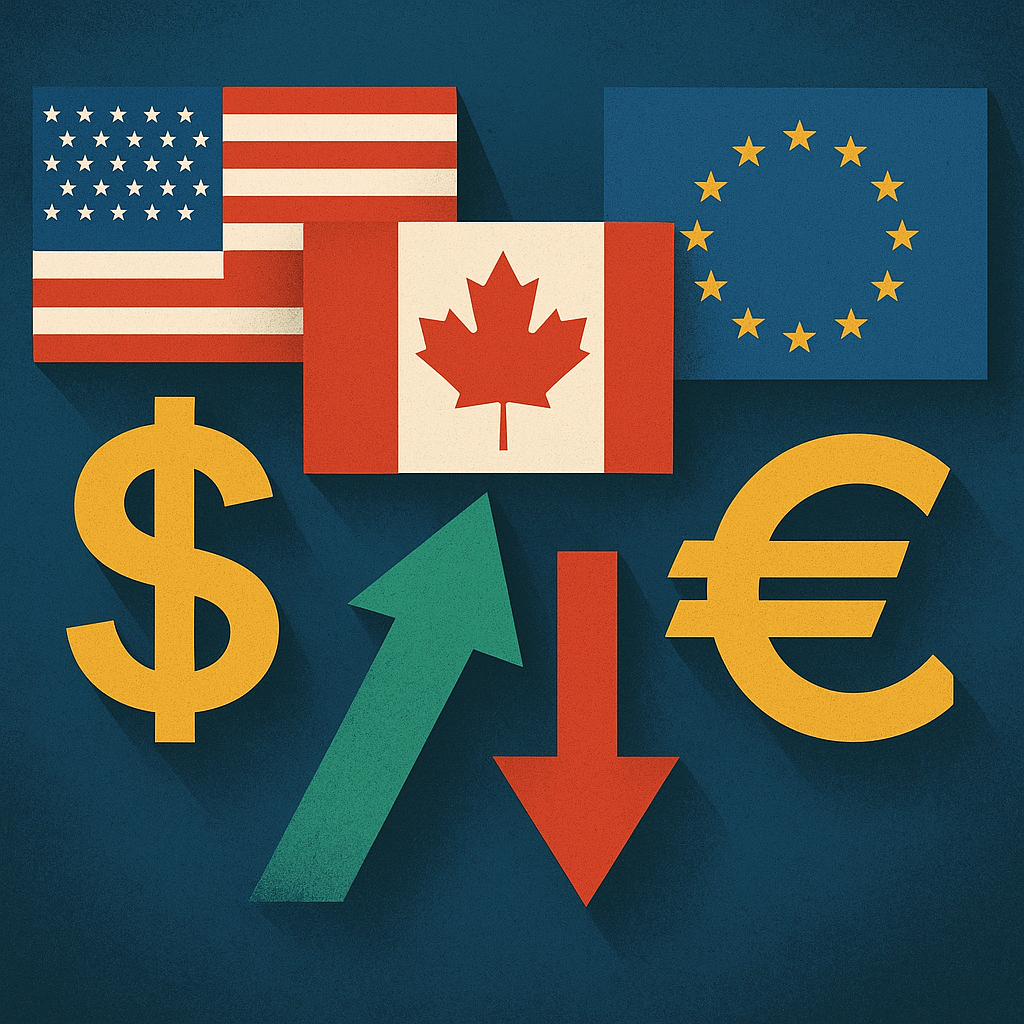
Fed Keeps Rates Steady as BoC Increases Policy Rate; ECB Leadership Change Fuels Euro FX Watch
The foreign exchange market finished a volatile week with a mix of central-bank moves and political developments that traders say could set the tone for the remainder of Q4. The U.S. Federal Reserve held its policy rate steady at the conclusion of its October 2026 meeting, reiterating that inflation remains elevated while stressing that further information would guide the stance on monetary policy. The statement suggested the committee does not see an imminent move but signaled that decisions will continue to hinge on incoming data, particularly on inflation and the labor market. The outcome kept the target range unchanged, a move that aligns with market expectations after a September rate increase had already priced in a cautious stance for late 2026. In the immediate market response, the U.S. Dollar index fluctuated only modestly, reflecting a broad sense that the Fed’s path remains data-dependent rather than policy-driven in the near term.
Biggest Event of the Week: Central Bank Week Delivers Diverging Signals Across Major Currencies
While the Fed decision was a focal point, traders shifted attention to a separate streak of central-bank actions within a five-day window. The Bank of Canada delivered a 25 basis-point rate increase to 2.5%, citing resilient domestic demand and solid global growth trailing a combined assessment of improved inflation dynamics. The BoC’s decision underscored the divergence between North American policy trajectories and the more cautious approach observed in other regions. Markets priced in a continued path of gradual tightening, with the BoC signaling that its next moves would depend on evolving growth and price data.
The European backdrop included a surprising development at the very top of the European Central Bank governance. Reports surfaced that ECB President Christine Lagarde resigned from her post, a move that would hasten a leadership transition ahead of the next policy cycle. Though not immediately binding on policy, the resignation injects uncertainty into eurozone rate expectations and could influence market positioning as investors reassess the timing and pace of rate normalization across the bloc. In euro-dollar trading, the shared currency found steadier footing as market participants priced in a smoother transition path for the ECB, even as leadership questions circulate.
Key Regional Impacts and Market Reactions
United States: The Fed’s October policy statement emphasized inflation as the principal risk and indicated readiness to respond to incoming data. Economists note that a potential shift in market pricing toward a later tightening path could support risk assets if inflation cools and growth holds up. The dollar’s performance has been sensitive to the Fed’s communications and the trajectory of wage growth, with traders awaiting December data for signs of policy reacceleration or relief.
Canada: Canada’s central bank raised the policy rate to 2.5% in a move aimed at curbing persistent inflation, while acknowledging global growth resilience. The decision reinforces a domestic policy stance that remains tighter relative to some peers and could keep the Canadian dollar bid-sensitive to retail and energy sector data.
Eurozone: With Lagarde’s departure news, traders weighed the potential timing of leadership change against the ECB’s longer-run inflation outlook. In the near term, euro volatility decreased as liquidity conditions remained stable, but the market is watching for signals from the ECB’s incoming leadership about the pace of policy normalization and inflation risk assessments.
Market Data Highlights
- Federal Reserve: Policy rate held in a target range of 5.25% to 5.50%; emphasis on data dependency and inflation monitoring.
- Bank of Canada: Policy rate increased by 25 basis points to 2.50%; language pointing to continued vigilance on inflation and global demand signals.
- EURUSD: The euro found support near established ranges as the ECB’s leadership transition was digested; traders cited a more cautious inflation outlook as a market driver.
- USDJPY: Yen range-bound in thin liquidity as investors weighed BoJ communications against U.S. policy clarity.
- Oil and commodity price backdrop: Markets monitored crude prices for implications on inflation and energy costs, with broader FX reaction anchored to central-bank narratives.
What to Watch Next
FX traders will parse upcoming U.S. inflation figures, payrolls data, and consumer sentiment indicators for clues on the next steps for the Fed. In Canada, the next round of inflation and growth data will determine whether tighter policy persists or pauses, potentially affecting USD/CAD dynamics. For the euro, the trajectory of European inflation and the timing of the ECB’s leadership transition will shape EUR/USD and EUR/GBP moves. globally, liquidity conditions ahead of year-end liquidity windows and fiscal policy developments in major economies could dictate the volatility regime in major currency pairs.
Conclusion
The past few days have highlighted a synchronized sequence of central-bank actions along with a heightened need to interpret leadership changes within the euro area. The biggest event with the potential for the most significant forex impact remains the evolving policy path of the Fed as it weighs inflation pressures against growth signals, complemented by the BoC’s rate hike and the ECB leadership transition. As markets adjust to this triad of developments, traders expect elevated volatility and rapid repricing in key pairs such as EUR/USD, USD/JPY, and USD/CAD as new data arrives and policy expectations recalibrate.