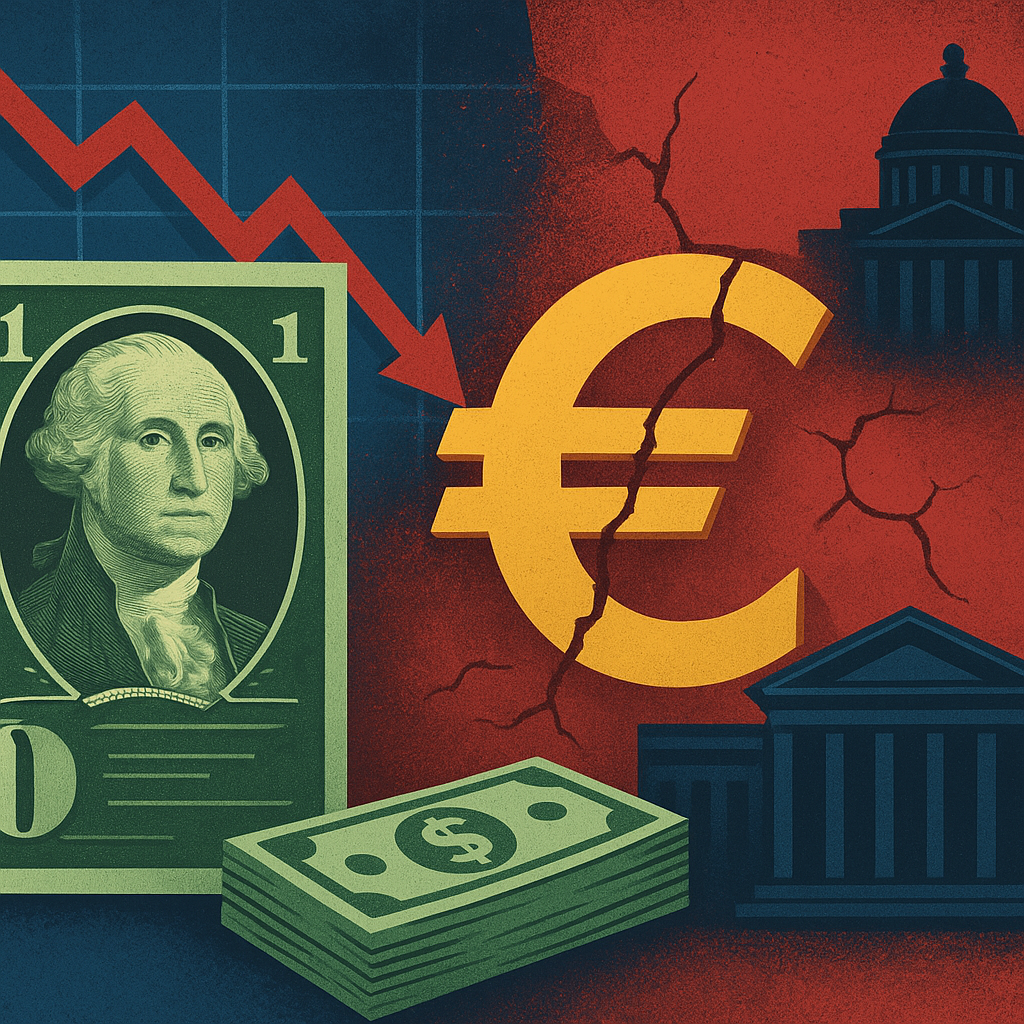
Dollar Gains Amid eurozone Debt Tensions as Markets Brace for ECB Minutes and Fed Trajectory
The foreign exchange market entered a week of heightened sensitivity as debt-market strains in the euro area collided with shifting expectations for monetary policy in the United States. Traders highlighted the converging impact of euro-area funding concerns, the upcoming release of central bank minutes, and ongoing questions about the path of U.S. policy as the dominant driver of major currency moves in the past few days.
Biggest event and market impact
The most consequential development for the forex landscape has been the potential clarity provided by the Bank of Europe’s policy accounts from its latest meeting, scheduled to be released in the coming days. Market participants are positioning for guidance on whether the ECB will maintain a measured stance or signal a gradual withdrawal from its easing bias in the face of inflation that remains uncomfortably high in parts of the euro area. The minutes are expected to shed light on how much emphasis policymakers place on energy-price pressures, growth indicators, and the risk that debt markets could tighten further if fragmentation reemerges across member states. A clearer ECB posture would have an outsized effect on EURUSD, potentially curbing a recent drift in the pair that has kept the euro in a tight range near parity with the U.S. dollar.
The backdrop to that event is a broader backdrop of euro-area debt dynamics, including recent tensions around government borrowing costs in France and other fiscally sensitive members. These developments have contributed to a backdrop in which the dollar has been broadly firmer against the euro and some other major G10 peers, as traders weigh the likelihood that U.S. policy could diverge from European monetary guidance in the near term. While the U.S. economy has shown resilience in recent data, the pace and durability of that strength continue to influence the path of the Fed funds rate, which in turn shapes global funding costs and currency valuations.
Recent data and the U.S. policy outlook
In the United States, traders have been parsing a stream of data for signs of momentum that would justify a further shift in rate expectations. A sequence of mixed indicators has left traders unsure about whether the Fed will extend its tightening cycle, pause, or begin to scale back rate increases later in the year. The outcome of the next U.S. inflation and payroll releases will be closely watched because they determine the odds of a higher-for-longer policy stance versus a gentler path that could bolster U.S. yields relative to other regions.
On the European side, the euro has traded in a cautious range as market participants await the ECB’s communication and any forward guidance on the course of policy. The euro’s sensitivity to energy prices and growth prospects remains a defining feature, particularly as the region faces ongoing energy transition costs and potential spillovers from broader geopolitical tensions. The combination of domestic data and the ECB’s tone will be critical for assessing whether the euro can sustain a recovery or remains vulnerable to renewed selling pressure if euro-area growth softens or if funding costs rise again.
FX performance snapshot and country-by-country dynamics
- United States: The dollar maintained a bid as U.S. data continued to hint at domestic resilience, supporting expectations for a potentially higher policy terminal rate relative to some peers. Traders emphasized the risk that a hawkish Fed path could keep U.S. yields and the dollar supported even as other rate markets faced uncertainty.
- Euro zone: The euro traded with caution as investors prepared for ECB minutes and weighed the impact of energy costs on inflation dynamics. France and other periphery nations added a note of caution as borrowing costs fluctuated on the back of debt concerns and political risk factors.
- United Kingdom: The pound remained responsive to domestic data and global dollar moves, with traders watching for Bank of England commentary that might hint at the pace of future tightening in the context of a steady UK growth picture.
- Asia-Pacific: The yen and other regional currencies traded with sensitivity to U.S. rate expectations and potential shifts in global risk sentiment, while markets in Australia and New Zealand kept a close eye on commodity prices and risk appetite.
Market mechanics and volatility
While the week has seen a modest overall shift in risk sentiment, the currency market has been characterized by a tug-of-war between the U.S. dollar’s relative yield advantage and the euro’s inflation and debt uncertainty. Traders note that liquidity conditions around key data releases and central-bank communications can amplify moves, particularly in cross pairs such as EUR/GBP, EUR/JPY, and USD/JPY. The energy-price backdrop, which has fed through to euro-area inflation dynamics, remains a core channel through which forex volatility could manifest in the days ahead.
What to watch next
Investors will be focused on the ECB minutes, U.S. inflation and payroll data, and any central-bank commentary that clarifies the relative policy paths of major economies. The interaction between U.S. rate expectations and European debt concerns will likely keep markets oscillating between dollar strength and euro weakness as traders attempt to calibrate the probability of further policy divergence. In addition, any geopolitical developments connected to energy markets or trade relations could tilt risk appetite and impact funding currencies in the near term.
For traders, the key risk events to monitor include the ECB policy account release, U.S. CPI and nonfarm payroll figures, and the next round of central-bank communications from Bank of England and Bank of Japan officials. A clear set of signals from these events could trigger more pronounced moves in EURUSD, USDJPY, GBPUSD, and other liquid cross-rates.
In summary, while the dollar has enjoyed a period of strength amid eurozone debt concerns and a looming ECB minutes release, the next pivot in policy messaging could reframe the trajectory of global FX markets. Traders should remain vigilant for a potential regime shift if inflation data aligns with a more hawkish or dovish narrative, and be prepared for a period of heightened volatility around major releases.
Note: This summary reflects developments observed in recent market activity and central-bank communications, with specific attention to euro-area debt dynamics, ECB communications, and the evolving stance of U.S. monetary policy. All figures and dates mentioned are based on recent public reporting and market calendars as of the latest available information.