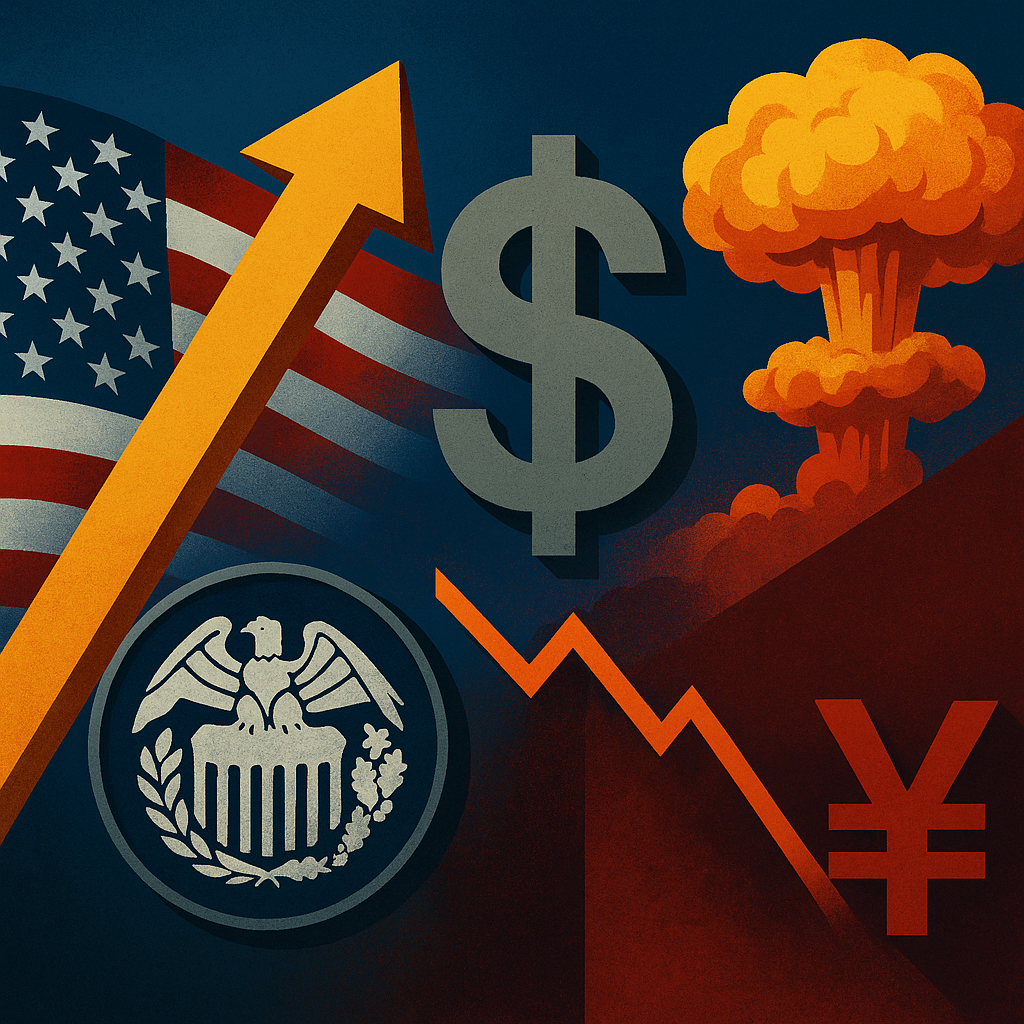
Fed Certainty Shifts the Forex Landscape: Warsh’s Jackson Hole Remarks Lift the USD as Markets Digest September Hikes and Geopolitics Push Yen and Risk Assets
The foreign exchange market entered September with a clearer line of sight on the Federal Reserve’s policy path after Fed Chair Kevin Warsh delivered remarks at the Jackson Hole symposium that reinforced the central bank’s commitment to the 2% inflation target. Traders quickly repriced rate expectations, pushing the probability of a 25 basis-point rate increase in September higher and contributing to a broad-based USD bid in the immediate aftermath. Exchange-rate dynamics across G10 currencies reflected the shift, with the U.S. dollar advancing on intraday charts while commodity-linked currencies and the euro faced competing forces from energy-market developments and inflation data.
Biggest event and its impact on forex markets
The most consequential development for the FX market over the past few days was the hawkish tilt around the Fed’s policy outlook following Warsh’s Jackson Hole comments. Market pricing, as captured by futures markets, moved toward a higher likelihood of a September rate hike, with some analysts estimating a roughly 60-65% chance of a 25bp increase into the Fed’s September meeting. The shift underscores the market’s recalibration around U.S. monetary policy credibility, inflation dynamics, and the risk of higher-for-longer rate differentials that can sustain USD strength versus many peers. The move comes as traders also weigh the potential for the inflation trajectory to slow, but not quickly enough to derail rate-hike expectations in the near term.
Across the Atlantic, a parallel narrative has been evolving. The ECB’s trajectory remains data-dependent, with expectations of further tightening at times due to persistent inflation in the euro area, while energy-price developments continue to affect risk sentiment and currency pair dynamics. The Bank of England has likewise faced a bifurcated path as labor-market data and domestic inflation trends feed into rate expectations, influencing USD/GBP moves as traders parse relative resilience in the UK economy against a broader global backdrop of geopolitical risk.
Geopolitics, energy shocks, and credibility: the three-pronged driver
Geopolitical tensions, particularly in the Middle East, have injected additional volatility into energy markets, and by extension, currency markets that are sensitive to oil and gas prices. The yen’s performance against the dollar has been especially notable in this context, as Japanese authorities have taken steps to support the currency in periods of sharp USD strength. A combination of interventions and expectations around BOJ policy has kept USD/JPY within a band that reflects persistent rate differentials and hedging activity by cross-market participants. In the near term, energy-price volatility remains a key watchpoint for policy-makers and traders alike, since higher energy costs can keep inflation sticky and complicate central banks’ paths to rate normalization.
Another focal point for forex is the evolving U.S. economic calendar. The labor-market data and upcoming consumer-price readings are central to the rate-hike calculus. Reports on employment, wage growth, and inflation will shape how aggressively traders position for further tightening or retreat from hawkish bets. One research note highlighted that the upcoming non-farm payrolls and CPI data could prove pivotal in confirming or challenging the nascent expectations for a September move, adding to the caution many traders are exercising around leverage and risk positioning.
Regional snapshots: currency-specific developments
USD—The dollar strengthened in initial sessions as rate-hike odds increased, supported by a hawkish Fed tone and firm short-term yields. The DXY index advanced modestly, reflecting a combination of rate-differential dynamics and risk-off sentiment in certain macro environments.
EUR—The euro faced a tug-of-war between domestic inflation pressures and external energy-market risk, with traders watching incoming data for clearer guidance on ECB policy timing. Softer inflation prints could temper expectations for near-term tightening, while unexpected resilience could lift the euro if energy fears rebalance.
GBP—Sterling traded with sensitivity to UK data flow and BoE communications. A cautiously hawkish stance from policymakers could help GBP when global risk appetite remains modest, though the currency’s performance remains highly data-dependent given the mixed domestic picture.
JPY—USD/JPY remained a focal point for intervention risk and BOJ policy commentary. If energy volatility and U.S. rate expectations continue to diverge, the yen may experience renewed volatility, with authorities likely stepping in to limit disorderly moves.
Emerging markets—FX volatility in South Africa, Turkey, and parts of Asia reflects global rate dynamics, trade tensions, and local growth data. USD strength tends to pressure EM currencies when global liquidity tightens, but some regions could benefit from improving external demand or a softer dollar backdrop if Fed expectations cool.
Data calendar and near-term risks
The road ahead for forex markets hinges on a combination of U.S. data releases and central-bank communications. Key items to monitor include:
- U.S. non-farm payrolls and the unemployment rate, with expiration of forward guidance on inflation dynamics giving traders clarity on the Fed’s next steps.
- U.S. CPI and core inflation readings, which will influence the pace of policy normalization and the degree to which rate differentials widen or narrow.
- ECB inflation metrics and regional growth indicators, providing the crosswinds for EUR/USD and EUR/GBP as the euro area navigates energy-price risks and domestic demand trends.
- BoE communications and UK economic indicators, including wage data and consumer spending, shaping GBPUSD volatility around policy expectations.
Analysts note that September remains a high-volatility period for FX markets given the confluence of central-bank decisions and geopolitical headlines. The macro backdrop — a still-resilient U.S. economy, ongoing energy-market volatility, and the potential for more rate moves in major economies — suggests traders will favor selective, data-driven positioning over broad risk-on bets in the near term.
Conclusion: a regime of cautious optimism for USD resilience
In the near term, the U.S. dollar appears poised to maintain momentum if Fed expectations remain tilted toward a higher-for-longer stance and if energy-market pressures persist. However, the trajectory will depend on the data flow and how much central banks prioritise inflation suppression versus growth sustainability. For forex participants, the message is clear: credibility matters. Warsh’s Jackson Hole remarks have reinforced the market’s focus on inflation dynamics and policy credibility, setting the stage for a September decision that could redefine short-term currency dynamics and set the tone for the rest of Q3. As traders parse the tapes, the currency pairs most sensitive to rate differentials — USD/JPY, EUR/USD, and GBP/USD — will likely remain the most liquid and volatile vehicles in the global FX arena.
Bottom line: the biggest event of the past few days is the Fed’s hawkish inference from Warsh’s Jackson Hole speech, which magnifies rate-differential dynamics and anchors near-term USD strength. Geopolitics and energy prices add a critical overlay, shaping the path of yen interventions and euro-area policy timing, while the data calendar in early September will be decisive for confirming whether September will bring a rate move or a hold — a distinction that will reverberate across the world’s currency markets.