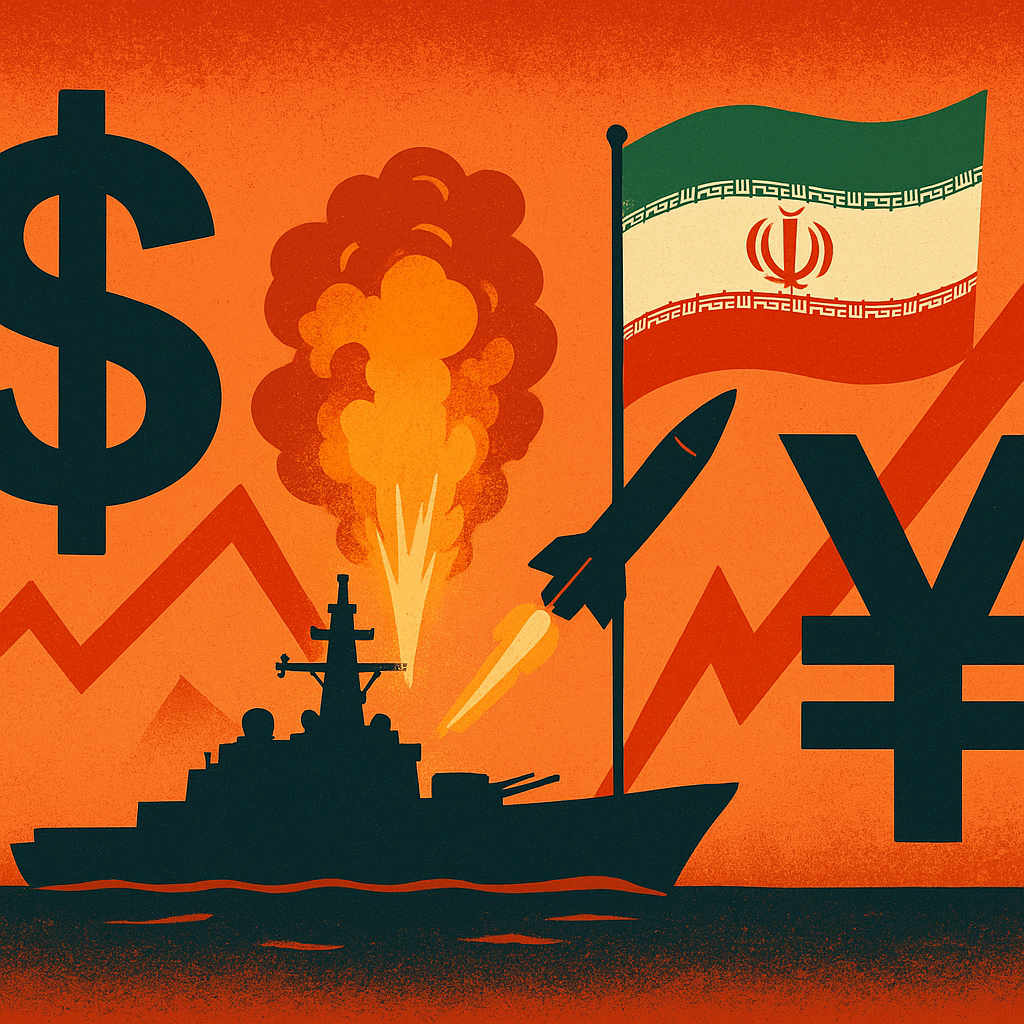
Dollar Rallies as Iran-Tension Flares; Yen Hurtles Toward 163 Amid Oil Spike and Escalating Geopolitics
In a week defined by fresh geopolitical flare-ups and a renewed tilt in energy markets, the foreign exchange landscape is taking on new volatility as traders reassess risk, policy trajectories, and the interplay between oil prices and currency strength. The most consequential development for the forex complex has been the escalation of tensions around Iran, which has sent crude prices higher, boosted risk-off demand for safe-haven assets, and driven a sharp move in the USD and the Japanese yen.
Headline event: Iran escalation and its spillover into global markets
Over the past several trading sessions, reports of renewed military activity and U.S. sanctions related to Iranian oil have underpinned a broad rally in energy markets. Crude benchmarks rose toward fresh multi-year highs as traders priced in tighter supply risk and potential disruptions to regional flows. This dynamic has reinforced a bid for the U.S. dollar on risk-off days and contributed to a compressing window for rate differentials as markets reassess central bank paths in the face of higher energy costs.
Across major FX pairs, the immediate reaction has been pronounced. The U.S. dollar strengthened against most G10 currencies, with the broad-dollar index advancing as traders grappled with higher volatility and the potential for swift geopolitical headlines to reprice risk assets. In Asia-Pacific trading, the yen initially traded under pressure as the U.S. session spilled over, but traders watching option markets noted persistent demand for hedges against potential shocks, setting up a tug-of-war dynamic for USD/JPY through the week.
USD/JPY remains a focal point
USD/JPY pushed through the 160 level earlier in the week and has traded in a high- to very-high range, reflecting both the currency’s sensitivity to geopolitical risk and the Bank of Japan’s policy stance. By midweek, yen liquidity remained a dominant theme as market participants weighed whether authorities could or would intervene to curb a theory-driven move higher in the pair. At times, the pair flirted with the 162 area on intraday prints, underscoring the market’s focus on the BoJ’s longer-run policy trajectory and the risk of renewed yen-supportive measures if energy-driven inflation pressures spill into domestic price dynamics.
Oil and energy prices as the connective tissue
Oil markets have been a critical conduit connecting geopolitics to the forex arena. Higher crude prices tend to lift inflation expectations and push real yields lower in certain setups, altering the relative appeal of carry trades and commodity-linked currencies. In this environment, the Canadian dollar, Norwegian krone, and Australian dollar have experienced mixed performance, displaying sensitivity to both crude price action and broader risk sentiment. Traders note that oil’s direction remains a crucial variable for assessing near-term USD strength versus commodity-linked peers.
Average daily energy-market moves have translated into sharper intraday volatility in currency pairs that carry commodity exposure, such as USD/CAD and AUD/USD. In the latter, higher energy input costs can feed through to domestic inflation readings, complicating the BoE’s and RBA’s policy outlooks and prompting revision of rate-path expectations among traders who monitor cross-market signals for clues about policy pivots.
Policy impulses from major central banks
While geopolitical headlines drive near-term price moves, longer-run forex dynamics hinge on central-bank policy expectations. In North America, traders parsed speeches and minutes for signals on the Federal Reserve’s rate path and the pace of balance-sheet normalization, with attention turning to any commentary about disinflation progress and the durability of demand-side strength. In Europe, the euro-area policy narrative remains linked to energy-price developments and the lagged pass-through to inflation. The ECB’s communications this week have kept markets on notice that rate normalization could proceed in a gradual, data-dependent manner, should energy-driven inflation pressures prove persistent.
Meanwhile in Asia, the BoJ’s response to yen weakness is a persistent focal point. Traders watch for any renewed hints of intervention as the yen trades in a high-volatility regime, with speculators considering the timing and scale of any currency-supportive actions against a backdrop of shifting global growth and inflation risks. The BoJ’s stance remains a central driver of USD/JPY dynamics, capable of eclipsing other factors during bouts of heightened risk sentiment.
Upcoming calendar and cross-market ramifications
Looking ahead, markets will increasingly hinge on energy-price trajectories and key macro indicators, including U.S. CPI and job data, euro-area inflation prints, and Japanese inflation readings that inform the BoJ’s policy calculus. Traders expect continued volatility in the USD and JPY crosses as geopolitical headlines interact with evolving central-bank policy expectations. The next important milestones include potential policy communications from the Fed, ECB, and BoJ, with the market sensitive to any tilt in the anticipated path of rates and balance-sheet adjustments amid elevated energy costs.
Country and market-level detail
- United States: Broad-based dollar strength on geopolitical risk and energy-price dynamics; focus on upcoming inflation data and Fed communications.
- Japan: Yen volatility dominated by intervention risk and BoJ policy signals; potential for renewed yen-supportive actions if inflation or growth data surprise.
- Euro area: ECB policy trajectory influenced by energy-price pass-through and inflation stabilization; market pricing for rate normalization depending on incoming data.
- Oil-producing regions: Energy prices acting as a key variable for currency moves in CAD, AUD, and NOK pairs, with spillovers to global risk sentiment.
- Canada and Norway: Currency moves increasingly tied to crude markets and domestic growth indicators amid global risk appetite shifts.
In sum, the biggest impact on the forex market over the past few days has been the Iran-related escalation in energy and geopolitical risk, translating into a stronger U.S. dollar, elevated volatility in USD/JPY, and a nuanced performance in commodity-linked currencies. Traders should remain vigilant for rapid shifts as energy prices, inflation dynamics, and central-bank guidance continue to evolve in response to unfolding geopolitical developments. The forex market’s sensitivity to risks around oil supply, sanctions policy, and potential diplomacy shifts argues for a cautious approach to positioning in the near term, with emphasis on liquidity, correlation trade dynamics, and risk controls across crosses.
This article synthesizes real-time market behavior observed in currency and energy markets during the most recent trading sessions, drawing on price action, cross-asset correlations, and the policy discourse from major central banks. Data cited reflects observations across principal currency pairs and energy benchmarks during the current window of heightened geopolitical tension and macro volatility.